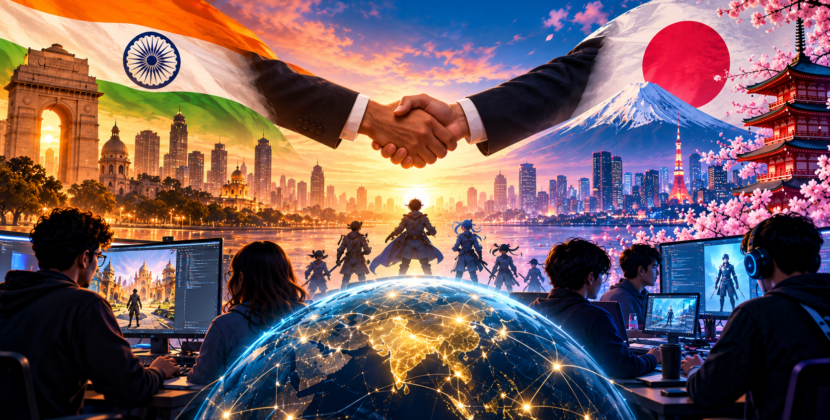


JetSynthesys-MIXI Partnership— India’s claim to a bigger pie in global gaming industry

The JetSynthesys–MIXI partnership may look like another corporate MoU. Look closer, and it reflects something much larger happening inside India’s gaming economy.

For years, whenever we spoke about the future of gaming in India, one number usually dominated the conversation: the number of gamers. It made sense. But I think that description is gradually becoming outdated. The more interesting question today is no longer simply how many Indians play games?

It is: How much of the global gaming ecosystem can India actually build, own and influence?

In last one and half decade India has made unprecedented progress in digital smartphone penetration in rural India, inexpensive mobile data, a young population and hundreds of millions of people discovering digital entertainment. Naturally, the global creator industry looked at India as an enormous consumer market. Even though, personally I consider this progress more of a consumer centric behavioural progress than a substantial economic development. An underemployed tech grad buying an iphone in EMI is not what I feel economic growth should look like. However, that’s a different topic altogether.

The recently announced Memorandum of Understanding between Indian digital entertainment company JetSynthesys and Japan’s MIXI makes that question particularly relevant. The two companies will explore collaboration across game development and publishing, esports, marketing and user acquisition, market intelligence, business development and even potential strategic investments.

On paper, it is an MoU. In the larger story of Indian gaming, however, it may represent something more interesting- the growing convergence of India’s scale with global gaming expertise.

Why MIXI’s Interest in India Matters

MIXI isn’t approaching India as a complete outsider testing an unfamiliar market. The Japanese company has already been building its understanding of the country. Its global version of Monster Strike, called STRIKE WORLD, began full-scale operations in India in April 2026.

MIXI has also been looking at India from an investment perspective. Through MIXI Global Investments, the company established a $50 million corporate venture capital fund focused on India, with investments across digital entertainment, lifestyle and sports businesses.

That context changes how we should look at the new JetSynthesys relationship. This isn’t simply about bringing a Japanese game to Indian smartphones.

It potentially connects capital, publishing expertise, intellectual property, game development, esports, distribution and local market intelligence. And that is precisely where India’s gaming story needs to move next.

India Has Already Solved the Audience Problem

India doesn’t need to prove that Indians like gaming. The audience is already here.

Research from Lumikai has previously estimated hundreds of millions of active gamers in the country, with a significant majority coming from non-metro markets. More recent research points to gaming becoming part of a much broader interactive-media economy where people don’t simply consume content — they participate in it.

That distinction matters enormously.

  • A television viewer consumes.
  • A gamer interacts.
  • A creator contributes.
  • An esports player competes.
  • A developer builds.
  • A publisher distributes.
  • An investor finances.

And an IP owner potentially earns from all of them.

So the real economic opportunity in gaming isn’t created merely by increasing the number of people playing games. It comes from increasing India’s participation across this entire value chain.

The Next Battle Is Over Intellectual Property

This, in my opinion is where the conversation becomes much more crucial. India can become one of the world’s largest gaming markets and still capture only a fraction of the industry’s long-term value if most successful intellectual properties, publishing networks and platforms continue to originate elsewhere. There is nothing inherently wrong with international games succeeding in India. Gaming has always been a global cultural industry.

The opportunity is to make the flow increasingly two-way. Can a game conceived in Pune, Kolkata, Bengaluru, Hyderabad or Guwahati eventually find players in Tokyo, Seoul, London or São Paulo?

Also Read: Can Namit Malhotra’s Ramayana open new doors for Indian VFX?

Can Indian mythology inspire global franchises without every Indian game becoming another predictable mythology adaptation? Can our developers create entirely new characters, worlds and gameplay mechanics? Possibly, can an Indian studio build something that survives for ten or fifteen years rather than disappearing after its first funding cycle?

These are harder questions than acquiring users. But these are also the questions that determine whether India becomes merely a large gaming market or eventually a gaming nation.

To my understanding, our indigenous gaming studios and creators mostly hustle for procuring investments, merchandising a w.i.p game, creating intermittent buzz while by the time the final product sees the limelight- the audience has already switched their attention to something else. This is not an industry problem but rather a perspective issue. Until and unless the government and the society as a whole learns to see through the cloud of their past conditionings about games- it can never become a credible contributor in Indian economy.

Lately, government of Telengana, Maharashtra, Tamil Nadu as well as our Union government are taking commendable initiatives to ride the growth of global gaming industry. Recent appointment of Shruti Verma as the CEO of GDAI also unlocks a plethora of hopes for the industry and young creators as well. Advancements and changes in last couple of years can give the much awaited impetus to Indian gaming industry.

Japan Offers an Interesting Lesson

Japan’s influence on global entertainment was never built merely by having a large domestic audience. It built intellectual properties. Mario. Pokémon. Final Fantasy. Dragon Quest. Sonic. Monster Hunter.

Individual franchises became cultural exports. Games expanded into animation, merchandise, films, communities, competitions and businesses that survived across generations.

MIXI’s own Monster Strike is another example of how a mobile game can evolve beyond the boundaries of a single application and develop a much larger entertainment identity.

India does not need to imitate the Japanese gaming industry. But  through this JetSynthesys–MIXI partnership we can certainly learn something from the philosophy behind it:

Build worlds, not just products.

A successful game may generate downloads. A successful IP can generate an ecosystem.

And This Is Where JetSynthesys Becomes Interesting

JetSynthesys occupies an unusual position within India’s digital entertainment landscape because its activities already stretch across gaming, esports, creators, publishing and entertainment IP.

Its portfolio includes game development as well as esports operations, while the company has also worked with international gaming companies and entertainment properties. That makes the potential JetSynthesys–MIXI partnership more interesting than a conventional distribution agreement.

JetSynthesys brings something international companies desperately need in India: contextual intelligence. India is not one homogeneous consumer market. Languages change. Cultural references change. Purchasing behaviour changes. Devices change. Internet quality changes.

Even attitudes towards gaming can change dramatically between households and regions. Understanding those nuances is difficult from thousands of kilometres away. A strong Indian partner can therefore provide something that cannot simply be downloaded from a market-research report: lived knowledge of the consumer.

Conversely, Japanese gaming companies bring decades of experience in designing, operating and monetising entertainment properties. Put those capabilities together intelligently, and collaboration can move beyond localisation towards co-creation.

Become a Professional Game Developer in 12 months

The Biggest Opportunity May Actually Be Talent

There is another side of this development that deserves far more attention. Students.

If international gaming companies increasingly view India not only as a consumer market but as a development, publishing and investment destination, the skills demanded from young Indians will inevitably evolve. The industry will need programmers, certainly.

But it will also need game designers, technical artists, 3D artists, animators, narrative designers, UI/UX designers, sound designers, producers, esports professionals, community managers, data analysts, product managers and specialists working with AI-assisted production pipelines.

This is where our education ecosystem has to catch up. Teaching somebody Unity or Unreal Engine is not the same as preparing somebody for the transitioning gaming industry. Software proficiency is only one layer. Students need to understand player psychology, storytelling, systems thinking, monetisation, game economies, collaborative production, intellectual property, cultural localisation, community building and — perhaps most importantly — how multidisciplinary teams actually build products together.

Gaming sits at a fascinating intersection of technology, art, psychology, storytelling and business.

Our education system must start treating it accordingly.

India Should Avoid Becoming the World’s Gaming Back Office

There is also a risk hidden inside all this optimism. India has exceptional technical and creative talent. That makes it attractive for outsourced development, art production, testing, animation, localisation and support services.

Those opportunities create jobs and should absolutely be welcomed.

But outsourcing alone should not become the final destination. Over dependence on outsourced projects is one of the key reasons for obliteration of Indian Animation and VFX industry. Likewise, the volatility of Indian IT industry is also a product of this overdependence on outsourced projects.

We have already seen this pattern elsewhere in technology: Indian professionals contribute significantly to global products while ownership of the most valuable platforms and intellectual properties remains concentrated outside India.

Gaming gives us an opportunity to write a somewhat different story. Services can build capability. Capability can build studios. Studios can build products. Products can become intellectual property.

And intellectual property can eventually become cultural influence. That progression should matter.

From “Made in India” to “Imagined in India”

Perhaps the most exciting future for Indian gaming isn’t simply Made in India.

It is Imagined in India. A gaming ecosystem where Indian studios develop original worlds. Where international companies collaborate with Indian creators rather than simply selling to Indian consumers. This is where students see game development as a legitimate intersection of engineering, design, storytelling and entrepreneurship. Where esports develop sustainable professional pathways.</p>

Where investors finance original IP rather than endlessly chasing copies of whatever genre happens to be fashionable. And where an Indian game doesn’t need to look “Indian” to prove that it came from India. That is an important distinction.

Japanese creators didn’t conquer global popular culture by constantly reminding audiences that their products were Japanese. They created experiences people wanted. India’s gaming industry eventually has to do the same.

An MoU Is Only a Beginning

Of course, we should keep the announcement in perspective. An MoU represents intent, not outcome.

The meaningful questions will come later. What products actually emerge? Will there be co-developed games? Can Indian developers gain access to international publishing opportunities? Will investments create original intellectual property? Will knowledge move in both directions?</p>

And most importantly, will any of these collaborations create globally relevant entertainment originating from India?

Those outcomes will matter far more than the announcement itself. But the direction is worth watching. For a long time, the world looked at India and saw hundreds of millions of potential players. Increasingly, it is beginning to see developers, creators, esports athletes, studios, entrepreneurs and intellectual property.

That is a far more exciting identity. India has already proved that it can play. The next chapter is about whether we can build the games the rest of the world wants to play.

Follow us to know more about the transitioning ecosystem of technology, art, science and human behaviour.

Subhodip Ghosh writes about emerging technology, gaming, education, skills, human behaviour and the evolving relationship between industry and the future of work.


“Uttam Kumar’s dazzling smile was his million dollar endowment.” Soumitra Chatterjee once said there was magic in that smile. And perhaps that explains why, even after all these years, people still stop when Uttam Kumar appears on a screen.

In 2026, West Bengal celebrated the birth centenary of its Mahanayak. Kolkata was filled with his photographs, film screenings, exhibitions and celebrations. And the most striking part was that… young people, many born decades after his death, were still turning up to watch his films.

Uttam Kumar left us in 1980, but somehow, he never really left Bengal.

For one generation, he was the superstar they waited to see on the big screen. For another, he was the actor their parents and grandparents introduced them to. Today, films like Nayak, Harano Sur, Mouchak, Saptapadi and Chiriakhana continue to find new audiences.

That is what makes Uttam Kumar different. He is no longer simply an actor from Bengali cinema’s golden era. He has become a part of Bengal’s cultural memory.

Almost half a century after his death, the crowds still come, the songs still play and that famous smile still appears on screens.

Perhaps the Mahanayak is no longer with us, but his cinema clearly is. And as every new generation discovers him, one question still remains:  That doesn’t mean it will be continuously mahanayak uttam kumar will continuously be seen at the programs and same goes for

How many more generations will fall in love with Uttam Kumar?

₹4,000 crore. One of India’s most iconic epics. Some of the biggest names in Bollywood. And a VFX team that has worked on films like Dune and Interstellar. The expectations from Namit Malhotra’s Ramayana is literally MASSIVE.

But here is the interesting part. The film has already faced its share of online backlash.

When the first glimpse arrived, audiences questioned everything from the VFX and character designs to the casting. Ranbir Kapoor as Lord Rama became a major talking point, while Sai Pallavi’s look as Sita also divided opinions. The trailer later opened another debate around costumes and aesthetics, particularly the looks of Sita and Kaikeyi. For a project reportedly mounted on a ₹4,000 crore budget, the audience is not simply expecting a big movie. They are expecting a visual experience which can stand beside the biggest global productions.

The makers, however, have defended their creative choices and asked audiences to experience the complete film before judging individual looks and visuals.

Ramayana: Part One is scheduled for Diwali 2026, with its international release reported for November 6 and its India release on this Diwali; 8th November 2026. Part Two is planned for Diwali 2027.

So, will Namit Malhotra’s Ramayana actually set a new benchmark for Indian VFX, or will the ₹4,000 crore spectacle struggle to meet the expectations?

What do you think? Write to us at @scopemagazine.in and tell us what you expect from Ramayana Part 1.

What if a few minutes of your adventure could mean years for someone else?

Imagine travelling across the galaxy, exploring unknown worlds, fighting alien enemies and searching for technology that could save humanity. Sounds like a familiar sci-fi game setup.

Now imagine returning home after what feels like a short journey…. but only to discover that years, decades, or even generations have passed.

That is where EXODUS becomes different.

Developed by Archetype Entertainment, EXODUS is a cinematic, single-player, third-person sci-fi action-adventure RPG set 40,000 years in the future. Players step into the role of Jun Aslan, a salvager who begins a journey which could transform him into a Traveler and potentially change the future of humanity.

For students and aspiring game developers, EXODUS is not interesting only because of its futuristic visuals or action-packed gameplay. It is interesting because of how it combines gameplay, storytelling, world-building and player choice into one experience.

From Salvager to Traveler

At the beginning of the journey, Jun Aslan isn’t a legendary hero. Instead, he is a just salvager fighting for the future of his homeworld.

Players will explore ancient ruins, derelict alien ships and forgotten locations while searching for powerful Remnants…technology and artifacts that could help reshape humanity’s future. Along the way, Jun faces hostile Celestial enemies, rival human factions and dangerous creatures.

This “ordinary person becoming a hero” structure is familiar in movies and games, but it gives players an important connection with the protagonist.

You don’t simply control a powerful character.

You grow with him.

And that is an important lesson for aspiring game designers: a strong protagonist doesn’t always need to start as the strongest character in the world. Sometimes the journey is what makes the character memorable.

The Game Mechanic That Changes Everything: Time Dilation

One of the most exciting concepts in EXODUS is Time Dilation.

In the game’s universe, interstellar travel takes place at extreme speeds. For Travelers, a relatively short journey can mean much more time passing for people back home.

The developers have built the game’s narrative around this concept. Choices made during a journey can affect relationships, missions and people who remain behind and those consequences can continue across generations.

Think about that from a game-design perspective.

In many games:

Choice → Immediate consequence

EXODUS wants to explore something more complex:

Choice → Time passes → Consequence → New generation → New consequence

This creates a fascinating storytelling system.

A decision you make today might not show its full impact until much later in the game.

And sometimes, you may never personally experience the consequences.

Your Crew Matters

EXODUS isn’t only about Jun.

Players will build a crew made up of specialists, soldiers, mercenaries, scholars and Awakened animals. Their abilities and relationships can influence both combat and decision-making.

This makes the companion system particularly interesting.

Your crew isn’t simply a collection of characters with different abilities.

They can become part of the emotional story.

You might fight alongside someone.

You might develop a relationship with them.

You might save them.

Or you might lose them.

And your decisions can influence what happens next.

For students learning game design, this demonstrates an important principle:

Characters should have a purpose beyond filling a screen.

A well-designed companion can contribute to gameplay, story, world-building and emotional engagement at the same time.

Combat Meets Creativity

EXODUS also brings a strong action component.

Jun uses the Recycler, a weapon that can be upgraded and modified, while the Gauntlet allows him to combine alien technology into new abilities. Players can approach encounters through direct combat, stealth or dialogue depending on the situation.

This is where gameplay design becomes important.

Giving players multiple ways to approach a problem creates something more valuable than simply giving them more weapons.

It gives them agency.

A player may think:

“Should I fight?”

“Should I sneak past?”

“Can I solve this through conversation?”

Those decisions make the player feel like they are participating in the story rather than simply watching it.

Why Students Should Pay Attention to EXODUS

For a student interested in gaming, EXODUS offers lessons far beyond entertainment.

Game Designers

Look at how the developers connect a science-fiction concept—Time Dilation—with the actual structure of player choices.

Narrative Designers

Study how character relationships and long-term consequences can make decisions feel meaningful.

3D Artists & Environment Artists

The game’s ancient ruins, alien technology, creatures and futuristic worlds demonstrate how visual design can help communicate the history of a fictional universe.

Game Developers

The combination of combat, exploration, weapons, abilities, AI characters and interactive environments shows how multiple systems need to work together inside a modern RPG.

Cinematic Artists

EXODUS also demonstrates how cinematic presentation can work alongside gameplay to create a more immersive experience.

And this is exactly why students should look beyond simply playing games.

Start asking:

How was this designed?

Why did the developer make this choice?

How does the game make me feel?

Why does this character matter?

How does the environment tell its own story?

That shift from player to observer to creator is where game-development learning begins.

A Universe Bigger Than One Game

EXODUS is also being developed as a broader science-fiction universe.

The official EXODUS ecosystem includes additional lore and storytelling materials such as a Traveler’s Guide, timeline content, tabletop RPG books and novels.

For the gaming community, this is an interesting example of transmedia world-building.

A successful game universe doesn’t necessarily have to exist only inside a game.

Its characters, history and stories can expand into books, tabletop experiences, animation, videos and other forms of entertainment.

For aspiring creators, this raises another important question:

If you created your own game universe, how could you expand it beyond the game?

The Gaming Industry Is Becoming More Than Games

game development course in kolkata I Red Apple Learning
game development course in kolkata

Today’s gaming industry brings together many creative and technical disciplines.

Game development can involve:

  • Game Design
  • Programming
  • 2D & 3D Art
  • Animation
  • UI/UX Design
  • VFX
  • Sound Design
  • Narrative Design
  • Cinematics
  • AI and Technical Art
  • Production and Project Management

A game like EXODUS is a reminder that modern games are collaborative productions involving people with very different skill sets.

For students, that means there isn’t just one path into the gaming industry.

You might be a programmer.

You might be a character artist.

You might design levels.

You might write stories.

You might create animations.

Or you might combine several of these skills.

When Can We Play EXODUS?

The wait now has a confirmed date.

EXODUS launches on April 7, 2027.

The game is planned for:

  • PlayStation 5
  • Xbox Series X|S
  • PC– Steam
  • PC–Epic Games Store

The official website also reports that the game has already crossed 500,000 wishlists, unlocking the first set of community milestone rewards.

Final Thought: What Would You Choose?

The most interesting thing about EXODUS may not be its futuristic weapons.

It may not be the alien worlds.

It may not even be the massive creatures or cinematic presentation.

It could be the question sitting behind the entire experience:

What if your decisions could outlive you?

For gamers, that could create a fascinating RPG experience.

For aspiring game developers, it provides something else…just a case study in how a simple science-fiction idea can become the foundation for game mechanics, narrative design, character development and world-building.

So when you next play a game, don’t just ask:

“Did I enjoy it?”

Also ask:

“What can I learn from it?”

Because every great game can be more than something you play.

It can be something that teaches you how to create.

Our students recently got another amazing chance to learn directly from an industry expert who is working with leading brands during an interesting Industrial Seminar (Pixel) on “Changing Hearts Frame by Frame.”The session was conducted by Mr. Swarup Deb, Co-founder and Creative Director of Girgit Studios Pvt. Ltd. The seminar was not just about animation, design, or learning how creative projects are made. It gave students a much clearer idea of how the creative industry actually works (the actual pipeline) and what companies expect from young these professionals today.

Understanding the Real Creative Industry

Working on an actual brand project is very different.

  • How does a project actually begin?
  • How do creative professionals understand what a client wants?
  • How does a simple idea become a complete animation or campaign?

During the seminar, Mr. Swarup Deb talked about all these things in very simple and practical ways. He explained…

  • How to think creatively
  • How projects move from one stage to another
  • And how creative teams work together to complete them

Students also got to understand how creative professionals balance their own ideas with what a project actually needs.

Real Projects and Real Industry Experiences

One of the most interesting parts of the seminar was getting a behind the scenes look at real projects.

Mr. Swarup Deb shared examples of projects he and his team created for leading brands as well as of awareness campaigns. Through these examples, students learned how much:

  • Thinking
  • Planning
  • Teamwork

As well as creativity go into creating something which people will be finally seeing on their screens.

He also talked about his own experiences in the creative industry and the challenges professionals face while working on different projects.

This made the session much more relatable because sour students were learning from real experiences and actual industry projects.

Good Animation Is About Making People Feel

The biggest learning from the seminar was that animation is not just about making characters move or creating “look like a wow” videos.

“A good creative project should people think, feel something, and remember the message even after they have finished watching it.”

So, through different practical examples as well as  discussions, our students understood that how a strong idea can turn very simple frames into powerful stories which easily connect people.

Wrapping Up…

Industrial Seminars like these give students a better idea of the skills which they will need to improve.

The session was interactive, engaging, and full of practical information.We sincerely thank Mr. Swarup Deb for spending his valuable time with our students and sharing his experiences, knowledge, and creative journey.

At Red Apple Learning, we will continue to create such opportunities where students can meet industry professionals, learn from real experiences, and understand the creative world beyond textbooks and classrooms.

Have you ever opened Instagram to check your latest reel, only to find that nothing is loading? Or maybe you tried sending a message on WhatsApp and got stuck with that annoying clock icon? Then you rush to Facebook, hoping it’s just an Instagram problem… only to discover that Facebook is down too!

Well, is Meta platforms down again?

The answer is “YES”, meta platforms are down again!!!

For those who don’t know, Meta is the company that owns Facebook, Instagram, WhatsApp, Messenger, and Threads. When Meta experiences a technical issue, millions (sometimes billions) of users around the world feel the impact almost instantly.


So, What Happens When Meta Goes Down?

The symptoms are usually quite dramatic:

• Instagram refuses to refresh.

• WhatsApp messages stop sending.

• Facebook logs users out unexpectedly.

• Stories disappear.

• Reels stop loading.

• People start questioning their internet connection.

And then comes the funniest part…

Everyone rushes to other platforms to ask:

“Is Instagram down for you too?”

Ironically, when Meta platforms crash, competing platforms often see a sudden surge in traffic because confused users are looking for answers. During major outages in the past, many people switched to other social media and messaging apps to stay connected.

Why Does This Happen?

Most people assume hackers are behind every outage, but that’s usually not the case.

In many instances, outages are caused by technical issues, server problems, software updates, network configuration mistakes, or infrastructure failures. For example, Meta has previously stated that a major outage was caused by a faulty configuration change within its systems.

Have Meta Platforms Gone Down Before?

Absolutely!

One of the most famous Meta outages happened in 2021, when Facebook, Instagram, WhatsApp, and Messenger were unavailable for several hours worldwide. The issue was linked to network routing problems that prevented users from reaching Meta’s servers.

More recently, Meta services have experienced other outages affecting Facebook, Instagram, and WhatsApp users globally. In March 2024, millions of users were unexpectedly logged out of Facebook and Instagram due to a technical issue.

The Real Victims: Social Media Managers

While casual users may enjoy an unexpected break from social media, digital marketers, influencers, content creators, and businesses often have a mini heart attack. Imagine scheduling an important product launch, campaign, or advertisement, only to discover that the platform itself is having problems.

For many businesses, even a few hours of downtime can affect customer communication, engagement, and sales.

What Should You Do During a Meta Outage?

Before blaming your Wi-Fi router or restarting your phone 17 times, try these steps:

1. Check if others are facing the same issue.

2. Visit Meta’s official status pages.

3. Wait for official updates.

4. Avoid changing passwords unnecessarily.

5. Use the time to touch grass, drink water, or finally reply to those emails you’ve been ignoring.

Yes, the last point might be the hardest.

Final Thoughts

Every time Meta platforms go down, the internet reacts the same way: confusion, memes, panic, and thousands of posts asking whether Instagram is working.

The good news is that most outages are temporary and are usually resolved within a few hours. Meta’s engineering teams typically work quickly to restore services whenever widespread disruptions occur.

So the next time Instagram stops loading or WhatsApp refuses to send messages, don’t panic.

It might not be your internet.

It might just be another day when the world’s favorite social media giant decided to take an unexpected coffee break.

For more freshly brewed content keep follow Scope!

How the Attack Actually Happened?

GitHub recently confirmed that one of its employees’ devices got hacked because of a malicious VS a code extension. According to reports, the attack started after the employee unknowingly downloaded a harmful extension from the Visual Studio Code Marketplace which  secretly installed malware into the system and then gave the hackers an access to the device.

Then the company later found that the hackers managed to steal a small amount of GitHub’s internal information. Thankfully, the breach was limited and there is no sign that customer accounts, passwords, or repositories were directly affected. GitHub also quickly removed the extension and began investigating the entire matter.

What made this incident really scary is that the attack came through something developers use almost every day. VS Code extensions are extremely common and are generally considered safe. But this case shows how even trusted tools can sometimes become dangerous if proper checks are not done.

GitHub said they immediately revoked the compromised credentials, isolated the affected systems, and started security investigations. And along with that they are also working to improve protections around employee devices and access permissions to reduce future risks.

The Dangerous “Poisoned” VS Code Extension

The biggest twist in this story is the so-called “poisoned” VS Code extension. Cybercriminals reportedly used a fake extension to spread malware. And once it got installed, the malware quietly communicated with external servers and tried to collect sensitive information from the infected machine.

Security researchers believe the extension may have been designed specifically to target developers. Since developers often have access to important repositories, cloud systems, and credentials, hackers see them as valuable targets.

Developers, be aware…

This incident is also a reminder that not everything available in online marketplaces is completely safe. Sometimes malicious software can hide behind useful-looking tools, attractive features, or fake reviews. That is why cybersecurity experts always recommend checking:

  • Extension publishers
  • Reviews
  • Download numbers
  • And permissions before installing anything

Many developers online reacted strongly after the news broke. Some said they have now started removing unnecessary extensions from their systems, while others are becoming more careful about what they install. This incident has also once again raised questions about software marketplace security and how platforms can better detect harmful uploads before they reach users.

Why This Incident Matters for Developers?

Even though GitHub says the damage was limited, the incident is still a big warning sign for the tech industry. Developers often work with sensitive code, private APIs, cloud servers, and company data. If a hacker gains access to even one developer’s machine, it can sometimes create a much larger security problem.

So, simple habits like:

  • Avoiding unknown extensions
  • Enabling two-factor authentication
  • Regularly updating software
  • And checking extension permissions can make a huge difference

For more freshly brewed content about the AVGC, IT and entertainment industry, keep following SCOPE “your go-to source for the latest updates”!

A fresh and exciting collaboration has officially started as Scope Gaming Community and EIILM Kolkata have joined hands to launch Scope Innovation Lab, with Red Apple Learning as the training partner. The main goal of this initiative is simple. To give students practical exposure, modern industry skills, and a platform where learning becomes more fun, interactive, and future focused.

Scope Innovation Lab with EIILM Kolkata and Scope Gaming Community.

Today, students want more than just classroom learning. They want to understand:

  • How industries actually work?
  • How real projects are built?
  • And what skills companies are looking for?

Scope Innovation Lab has been created keeping this in mind. Students here will get opportunities to learn through:

  • Workshops
  • Live sessions
  • Collaborative projects
  • Innovation activities
  • Gaming related events
  • Creative training programs
  • And industry interaction

One of the most exciting parts of this collaboration is that students will get exposure to multiple modern fields together. They will explore areas like:

  • Artificial Intelligence
  • Machine Learning
  • Game development
  • Animation
  • Graphic design
  • Digital media
  • UI UXDesigning
  • Web technologies
  • And other immersive technologieslike AR/VR/MR etc.

which are shaping the future job market. So, instead of only studying theories, students will learn how these things are actually used in professional industries.

EIILM Students Join Red Apple Training Campus to Attend a Webinar

Since Red Apple Learning is the official training partner, students will also get guidance from experienced mentors and industry professionals. This will help them understand:

  • Real workflows
  • Teamwork
  • Project execution
  • And portfolio development from a practical perspective

The idea is very simple… to make students industry ready from the beginning itself.

Another important thing about Scope Innovation Lab is the environment it wants to create. It is not just about training students. It is also about…

|| Building confidence ||Creativity ||Communication skills ||  Innovative thinking ||

There are may students who feels disconnected between the college education and actual industry expectations. This collaboration aims to reduce that gap and help students become more prepared for future careers.

Mr. Arup Roy, Founder and CEO of Red Apple Learning, also expressed his excitement about the collaboration. He said, “Today’s students need real skills, real exposure, and real industry understanding. Through Scope Innovation Lab, students will get opportunities to work closely with mentors, learn modern technologies, and understand how creative and digital industries actually function.”

He further mentioned that the collaboration is designed to help students discover their interests and build strong career paths in future driven industries like gaming, AI, design, development, and digital content creation.

The involvement of Scope Gaming Community makes this initiative even more dynamic because the community already has a strong connection with young creators, gamers, tech enthusiasts, CEO’s of top companies and innovators. Their involvement will help create an engaging ecosystem where students can learn while exploring their passion and creativity at the same time.

Wrapping Up…

The partnership between Scope Gaming Community, EIILM Kolkata, and Red Apple Learning is expected to open exciting opportunities for students who want to build careers in modern digital industries and become future ready professionals.

Can We Finally Get the Peaceful Social Media Feeling Back?

If we can say one thing honestly, social media in 2011 felt much more peaceful than what it feels like today. Back then, people used apps to connect with friends, share random thoughts, upload blurry photos, and just have fun without constantly worrying about trends, algorithms, trolling, or “going viral.” That simple and calm feeling slowly disappeared as platforms became more commercial, addictive, and noisy. But now, many people feel that same old peace can finally be achieved again through an app called Bluesky.

Bluesky is a social media platform that looks a little similar to Twitter or X, where people can post short updates, photos, opinions, memes, and interact with others. But the biggest difference is the vibe. Instead of making users feel overwhelmed, the app tries to make social media feel lighter and more personal again.

The Thought Behind Creating Bluesky

The idea behind Bluesky was actually very different from most social media platforms. The project was first started by Jack Dorsey with the goal of creating a decentralized social media platform. In simple words we can say that the platform was designed so that users would have more freedom and less control from one powerful company.

Over time, many people became frustrated with apps like Facebook, Instagram, and X because everything started revolving around engagement and attention. The more controversial or emotional a post became, the more it was pushed by algorithms. Slowly, social media stopped feeling social and started feeling exhausting.

Bluesky was created to change that experience. The platform focuses more on community, conversations, and user control instead of constantly pushing viral content.

Why People Are Choosing Bluesky Over Other Apps

One of the biggest reasons people are moving to Bluesky is because they are mentally tired of mainstream social media.

  • Endless advertisements
  • Toxic comment sections
  • Fake engagement
  • And unnecessary negativity

which made many users feel drained.

But Bluesky feels calmer to many people because the app is still smaller and more community based. Artists, writers, photographers, and even casual users are enjoying the platform because conversations feel more genuine there.

Another reason people are liking the app is the amount of control it gives users. On Instagram or Facebook, algorithms mostly decide what appears on your screen. But on Bluesky, users can customize feeds according to their interests. Whether someone likes books, movies, gaming, art, or photography, they can shape their own experience much more easily.

The platform also has fewer advertisements compared to mainstream apps, which makes scrolling feel less irritating and more natural.

Is Bluesky the Future of Peaceful Social Media?

Of course, Bluesky is still growing and it is much smaller compared to Instagram, Facebook, or X. Not everyone has shifted there yet, and many people still use bigger platforms because their friends, creators, and communities are already present there.

But maybe the smaller size is exactly why Bluesky feels refreshing right now. It feels less competitive, less fake, and less stressful. Many users say it reminds them of the old internet days when social media was about expression and connection instead of constantly chasing numbers.

At the end of the day, Bluesky is not just another app. It represents the idea that social media does not always have to feel addictive, loud, or mentally exhausting. Sometimes people simply want a peaceful space where they can share thoughts, interact normally, and enjoy being online again. And maybe that is exactly why Bluesky is slowly becoming popular across the world.

You can simply download from app store

And for more freshly brewed content keep following Scope! Oh, and don’t forget to write in the comments about your thoughts on this!

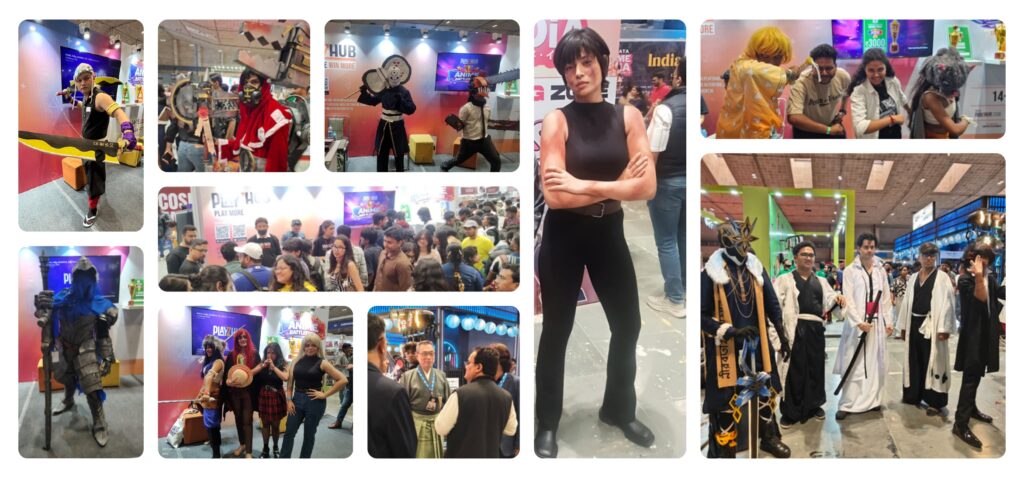
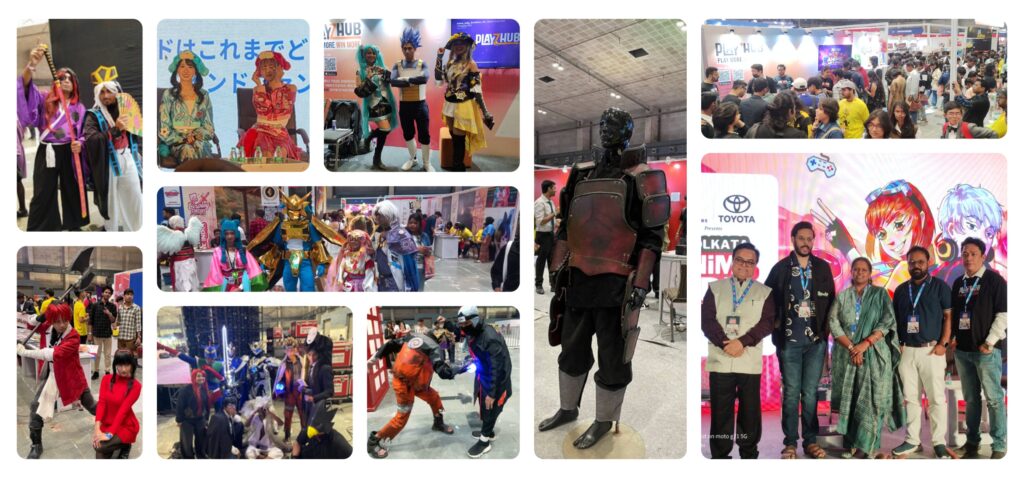
Kolkata has made history by showing that anime now extends beyond a niche interest; it is a movement. Anime India Kolkata 2026 proved how strong and passionate our city’s anime fanbase and community has become. The event was a whole different level of energy. Anime India Kolkata 2026 had over 30,000 footfall and attendees over the two event days, and the many of the attendees’ excitement was relentless. For many cosplayers, creators, gamers, family, and students attendees , it was a celebration. Anime India Kolkata 2026 was a celebration of the merging of Kolkata’s creative spirit and Japanese pop culture intertwined.

The event was backed by major brands. Playzhub, Maruti Suzuki, Amazon, AMD, Pulse, and Marvel & Manga took Anime India Kolkata 2026 to another level by giving the event a strong sense of business. By having stalls that focused on anime, gaming, and digital entertainment, it made a strong statement that these industries have become hobbies with serious audiences.

Scope Gaming Community and Red Apple Learning Successfully Hosted Global Game Jam 2026 Kolkata

The youth of Kolkata showed the most passion, and it certainly was the most impressive. Kolkata’s anime fanbase is growing rapidly, and the two days of Anime India Kolkata 2026 was insane! The fans’ cheered during the announcements, and the cosplay walks, tournaments, and panels proved one thing, “this city is evolving fast.” And “Anime, gaming, and digital communities are not just global trends anymore.” They are becoming part of Kolkata’s identity.


Global anime legends were one of the most notable features of the event. As a special guest, Susumu Mitsunaka, renowned director of Haikyu!!, graced us with his presence. He was also joined by Tetsuro Araki, director of the legendary series Attack on Titan and Death Note. For many fans, seeing these creators in Kolkata felt unreal. This showcased the global anime industry’s acknowledgement of India, especially Kolkata, as a major center.
Anime India Kolkata 2026

It was not just about the fans in the audience during the panel discussions. There were discussions that went beyond the audience. There were experts who discussed education, the AVGC (Animation, Visual Effects, Gaming and Comics) sector, career prospects, and India’s potential position as a leading content producer in the world. Such discussions were truly motivational for students whose aspirations are in animation, game design, storytelling, and digital media.

Now we come to one of the most enjoyable and lively parts of the event, the Playzhub stall.


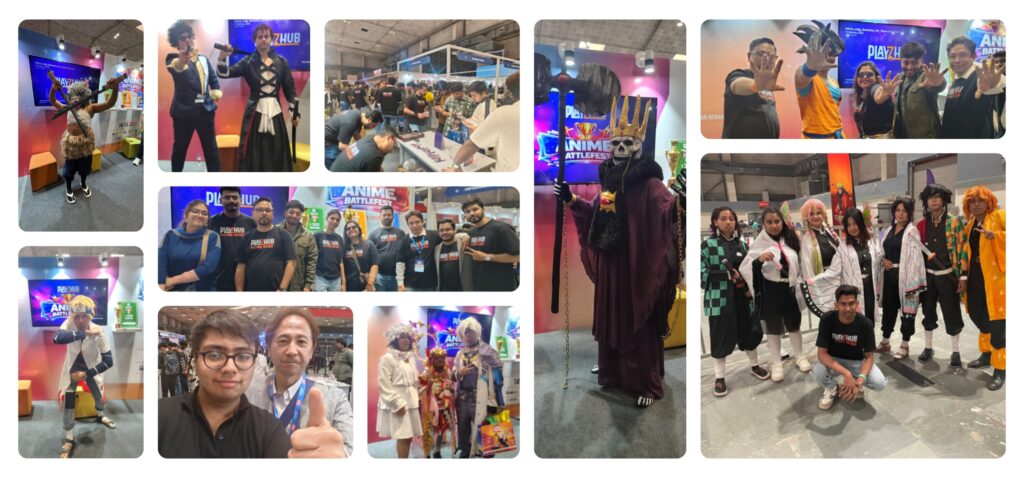
Playzhub claimed center stage with its “Anime Fest Tournament”. Students and visitors were downloading the Playzhub app (on Android and IOS) right at the stall and joining the tournament instantly. There was a lot of excitement. People were competing and celebrating their victories. It felt like a mini esports arena at the festival.

Why Free Online Solitaire Game Became a Must-Play Game for Casual Gamers Worldwide

Playzhub did not just organize a tournament. They created an experience. There were lots and lots of gifts, surprise rewards, and constant engagement with the audience. The team interacted warmly with everyone, making even first-time participants feel comfortable and included. It became one of the most crowded and talked-about stalls during the event.

Anime India Kolkata 2026

Their collaboration with Anime India 2026 showed how digital platforms can actively build communities. Playzhub is not just about playing games. It is about connecting gamers, encouraging competitive spirit, and creating safe, exciting spaces for youth to express themselves.

Events like this clearly show that Kolkata is confidently stepping into the global pop culture space. The city is no longer just known for its literature, art, and heritage. It is now emerging as a strong player in anime, gaming, and digital entertainment. The passion and creativity of the youth once again proved that Kolkata is evolving. And not quietly. It is proudly standing on a global stage.